Acrylic Painting : A Beginner’s Step-by-Step Guide
The super magical guide to learning how to begin painting with acrylics: aka why acrylic painting is the absolute best 101.
Where Do I Even Start?: Acrylic Painting 101 – From Inspired to Artist
What is the first artwork that comes to mind when painting is mentioned? Go on, I know you can think of at least one. Where you thinking of the Mona Lisa or The Last Supper by Leonardo da Vinci? What about the impressionistic series, such as Water Lilies, by Claude Monet? Or how about The Starry Night or even Sunflowers by Vincent van Gogh? Or perhaps thinking of all these masterpieces makes you want to scream, much like Edvard Munch’s The Scream? See what I did there, a masterpiece!
But seriously, how do you even know where to start? With so many painting options to choose from it is very easy to get overwhelmed. From canvas sizes, painting brushes, tube paints or pan paints, dry brushing or wet-on-wet techniques, it can get very stressful very fast.
That is where Paintbywonder comes in to save the day. I want to ensure that the first steps with painting are a magical and imaginative process, just as art should be. So take a deep, very deep breath and lets begin our own wonderful journey into the world of acrylic painting – one brushstroke at a time. I hope this inspires you to pick up a paintbrush and just begin (hey, or begin again – we don’t judge around here!). So let’s take the fear out of painting and begin focusing on the wonder of painting, the joy of painting, the imagination of painting again. And don’t forget, you got this – respectfully so, from one artist to another.
So what are you waiting for? Let’s begin.
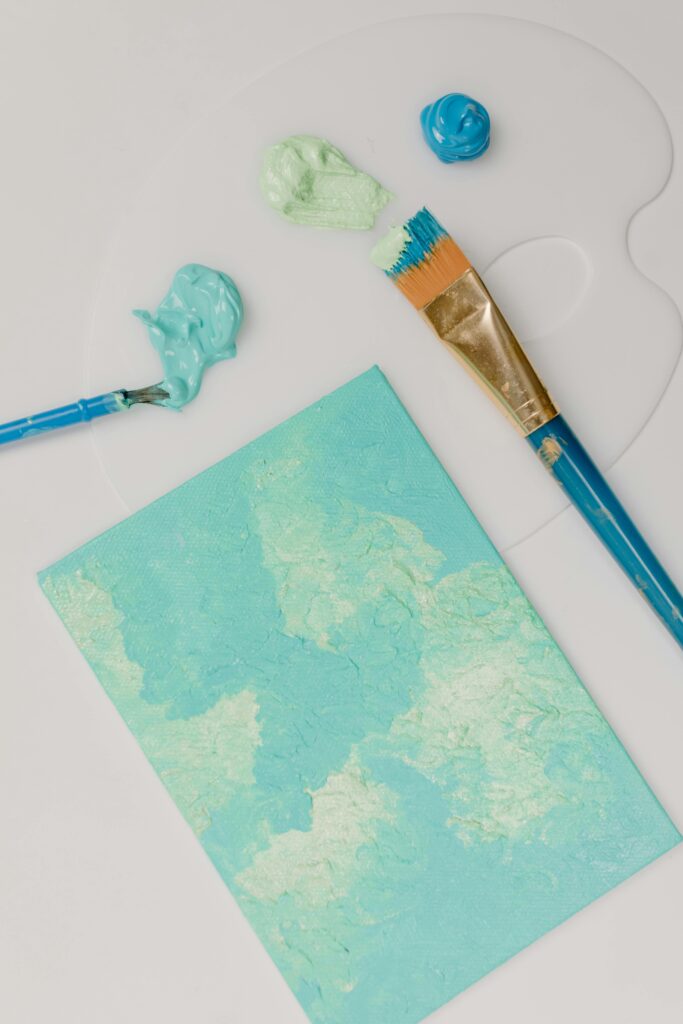
The Absolute Basics: Simple Acrylic Painting – Where to Begin
Okay, so you think you can paint? Great! That is the first step into becoming an artist, an acrylic painting artist. The first absolutely beginner basic is to:
- Believe that you can paint
- Know that you will paint
- Go forth and paint
Yes, it’s that simple! Well, kinda. It is the most crucial first step, the beginner one-two-threes.
But there are some technicalities, some rules, some guidelines to get you started on your journey fellow artist. Yes, you are an artist – no takebacks here, claim it Future Artist!
Unlike drawing, which requires any kind of paper and a number two pencil to get started, painting my friend requires a bit more to begin with.
But around here we think in terms of getting started, so no fancy-pancy painting around here. I want you to get to the point where you are the most confident and comfortable artist, ready to paint any and everything at command. But, how do you get there, you have so graciously asked. We’ll get there one painting at a time.
So what will you need for your very first painting masterpiece?
Glad you asked.
The Absolute Basics: Simple Acrylic Painting – Preparing Your Workspace
Wait just a minute, I know you are super eager to start painting! And that’s great! But we need to talk about workspace. Rumor has it that you need a whole artist’s studio before you can ever paint, and I’m here to assure you that the rumor is totally false. But you do need adequate space and a well-ventilated area to start with.
So, before you even pick up a brush, setting up a comfortable and organized workspace is essential. A good artist always has a setup that not only inspires but helps you stay focused and prevents unnecessary mess or frustration while painting.
Choose a space with good lighting (natural sunlight is my favorite) so you can clearly see colors and details. Natural light is ideal, but a bright desk lamp works just as well. Make sure your surface is protected since acrylic paint can dry quickly and become difficult to remove.
Workspace essentials:
- Cover your table with newspaper, plastic, or a drop cloth. This keeps the surface protected from any acrylic paint fly-aways
- Keep a cup of clean water nearby for rinsing brushes. Pro tip: Have two water jars nearby, one for rinsing your brushes, and one for clean water only
- Have plenty of paper towels or a nice cheese cloth ready for quick cleanup
- Keep paints and brushes arranged nearby within easy reach for your totally awesome painting session
A well-prepared space sets the artistic mood for a smooth and enjoyable acrylic painting session.
Now that we have some workspace essentials covered, when do we paint? Glad you asked. There is some more information you should know.
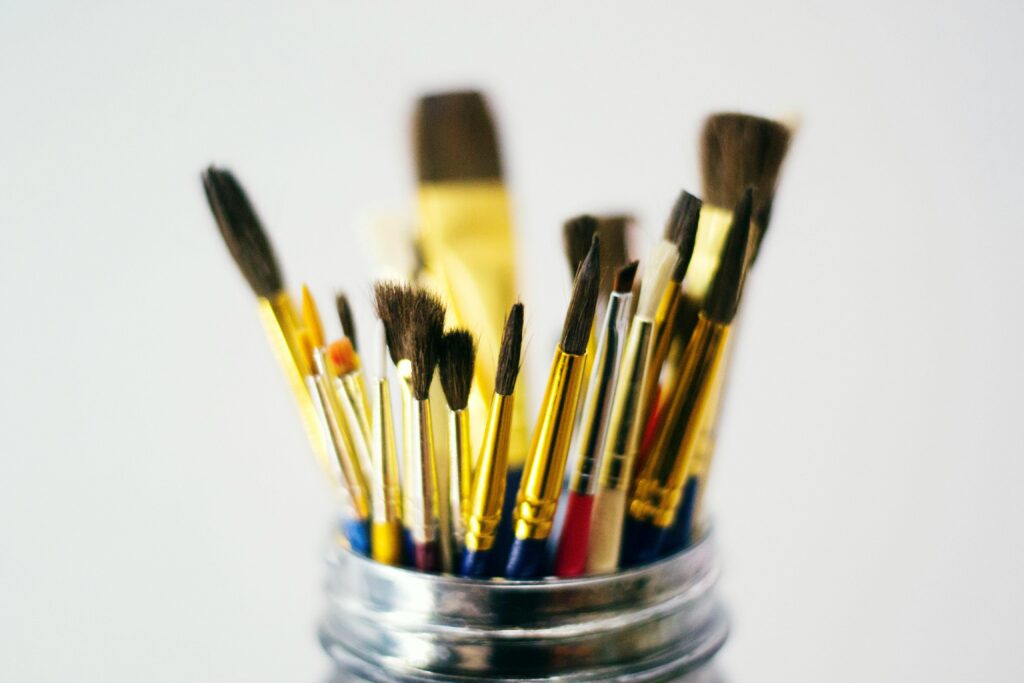
The Absolute Basics: Simple Acrylic Painting – Painting Tool Essentials
We covered some essential workplace tools such as a lamp or a water jar. But what about the tools needed to paint a magical masterpiece?
We’ll need canvas I’m sure, and a thousand and one paintbrushes and a plethora of acrylic paints – oh my!
To start painting, we will focus on the absolute basics- just enough to get you started on your painting journey. Once you have the basics in your toolkit, you can always expand to more fancy products, more streamlined solutions, or more aesthetic artsy supplies.
But for now, my painterly friend, the absolute basics.
Essential Acrylic Painting Supplies for Beginners
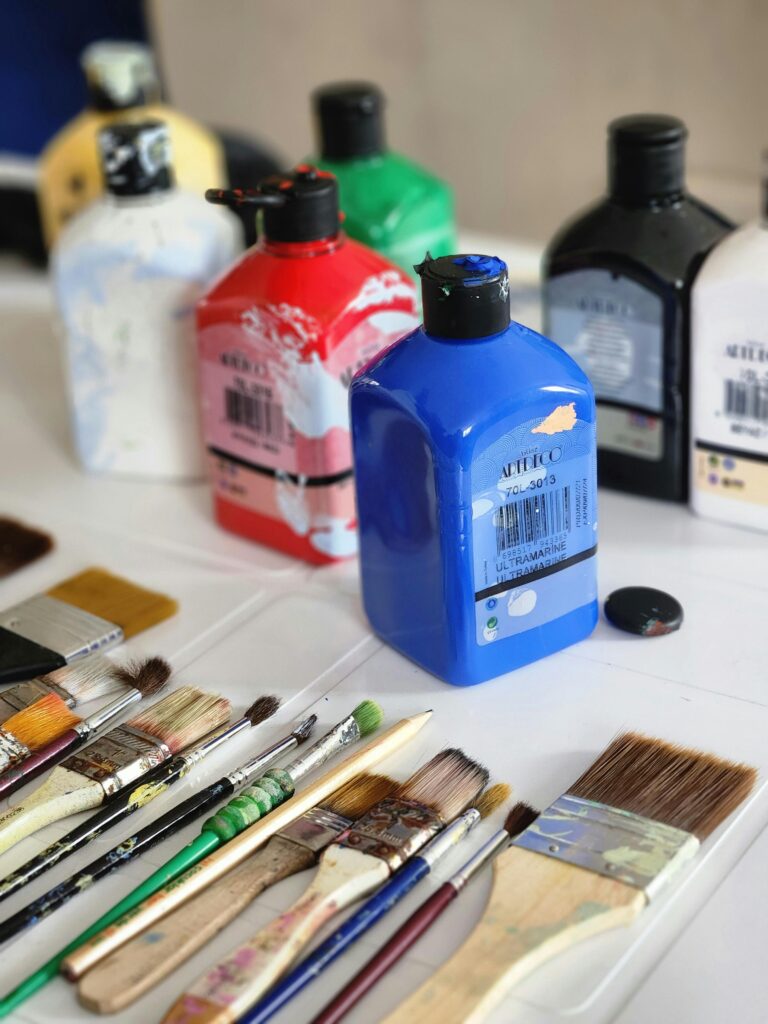
1. Acrylic Paints – The Painter’s Palette
- Starter sets with basic colors like:
- Titanium White and Mars Black
- Primary Yellow, Red, Blue
- Burnt Umber
- Phthalo Green or similar
Pro Tip: You can mix most hues from the primaries (yellow, red and blue), so you don’t need to have every color at first. Remember less is more, then when you become comfortable with the basics, add on another color to try.
2. Brushes
Pick a range of shapes and sizes:
- Flat brushes (for broad strokes & blocking in color)
- Round brushes (for details & lines)
- Filbert brushes (versatile, soft edges)
A small beginner set works great — look for synthetic bristles specifically for acrylic painting.
3. Acrylic Paper / Canvas
- Surface options:
- Acrylic pads or heavy paper (at least 140 lb / 300 gsm)
- Pre‑primed canvas panels or stretched canvas
Pro Tip: Canvas panels come in various shapes and sizes and are very affordable and great for practice.
4. Palette
- Disposable palettes
- Palette paper pads
- Plastic or wooden palettes
These help you keep paints organized and separate, allowing for paint mixtures without ruining your workspace.
5. Water Container
- Two cups/jars:
- One for rinsing brushes
- One for fresh cleaning
Pro Tip: Acrylics dry very fast, so keep water nearby to refresh your paint when needed!
6. Paper Towels or Cloths
- For cleaning brushes, wiping palettes and blotting paint
7. Apron or Old Clothes
Acrylics are permanent when dry, so be sure to protect yourself and your area by having an artist apron or old clothes!
TL;DR (Quick Summary)
- Remember to start small. Painting takes time and effort, so you want to invest in beginner friendly products and procedures to just start the process of acrylic painting. You can always add more products and techniques later on as you grow.
- The first step: Believe that you can paint and you can create true wonders – one paintbrush at a time.
- Keep and organized, clean, and well-lit workspace before you begin.
- Beginner friendly products are the way to go, keeping it simple at the start gives you more time to focus on the fun part – painting!
By following these steps, beginners can confidently create acrylic paintings while learning essential techniques along the way.